

.webp)
What kind of programming can you do with a LIMS?
Laboratories are the heart of scientific discovery and innovation. To keep up with the rapid pace of advancements, labs require efficient data management systems.
That’s where Laboratory Information Management Systems (LIMS) come into play. LIMS programming is the backbone of these systems, enabling customization and integration to meet the unique needs of various laboratories.
In this article, we’ll explore the world of LIMS programming, from basic concepts to advanced applications, and understand how it can transform the way your laboratory operates.
Laboratory Information Management Systems, or LIMS, are software solutions designed to manage and track laboratory data and processes. These systems streamline operations by automating data entry, sample tracking, and reporting.
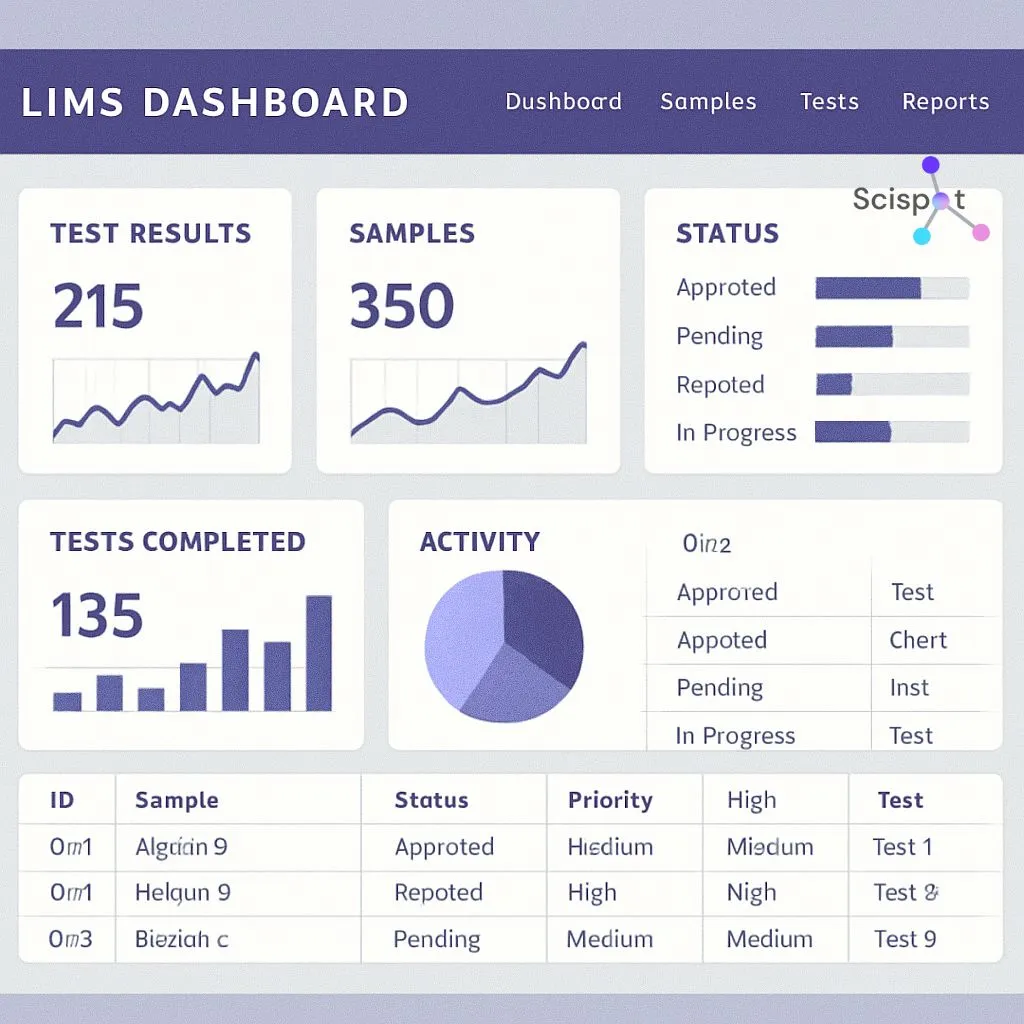
With a modern LIMS, programming does not just mean “writing code.” It also means using APIs, integrations, and automation layers to keep instruments, results, and workflows connected end-to-end.
Scispot stands out here because it treats lab data like a structured system from day one. Labsheets are designed as a relational database with a spreadsheet-like interface, and Scispot provides APIs to create and update structured rows reliably.
The Role of LIMS Programming
LIMS programming is essential for tailoring the system to a lab’s specific needs. It involves writing and modifying logic to customize features, integrate with other software, and enhance overall functionality.
In some legacy ecosystems, “programming” can mean learning a vendor-specific scripting language. LabWare, for example, teaches “LIMS Basic” as an embedded macro scripting language for triggers, calculations, and automation scripts.
Scispot’s approach is more aligned with how modern lab teams work. You model data in Labsheets, automate flows with integrations (GLUE), and use secure REST APIs to program what needs to be programmatic.
Why Scispot Is Built for Real LIMS Programming
Scispot is a strong fit for labs that want “real programming power” in a LIMS without turning the system into a brittle custom project. It gives you structured, spreadsheet-like data capture in Labsheets, workflow traceability in Labflows, and an ELN-style place to execute and standardize how work gets done. That matters because most LIMS programming efforts fail when sample tracking, results, and execution live in different places. With Scispot, the “logic” of your lab can live close to the data, so changes stay easier to manage over time.
For teams that need deeper control, Scispot supports automation through APIs and integrations through GLUE, so instruments and upstream/downstream systems can push data in cleanly. You can also pair that with Python-based analysis patterns, so labs can turn raw outputs into validated calculations, QC checks, and repeatable reports. Think of it like having a reliable “data spine” for the lab, and then snapping on scripts and integrations like LEGO blocks. The base stays stable, while the automation grows.

Programming in Scispot also stays practical for regulated work. You can design workflows that enforce required fields, lock down edits, and keep clean traceability from sample → run → result → report. That reduces the need for one-off scripts just to stay audit-ready. It also makes it easier for mixed teams. Scientists can run the workflow. Ops can review it. Engineers can extend it.
Customization
Every laboratory has unique workflows and requirements. LIMS programming allows labs to customize the software to fit their specific processes.
With Scispot, customization can start with the data model itself. Labsheets are positioned as a fast way to design lab databases, and the API documentation supports working with row IDs for programmatic updates.
The trap with many LIMS deployments is customization that becomes fragile over time. Multiple industry sources note that configuration tends to reduce upgrade risk, while heavy customization can increase complexity and ongoing cost.
Integration
LIMS integration is critical for seamless data exchange between different systems. Through programming, LIMS can connect with laboratory instruments, software applications, and databases.
Scispot leans into this with GLUE as its integration and transformation layer. Scispot also markets direct support for processing Labsheets data via secure REST APIs and connecting to Jupyter Notebook workflows.
In practice, this reduces copy-paste work and makes data more trustworthy. It also creates a repeatable pattern: ingest instrument output, transform it, run QC checks, and write clean results back into the same structured system.
Development and Enhancement
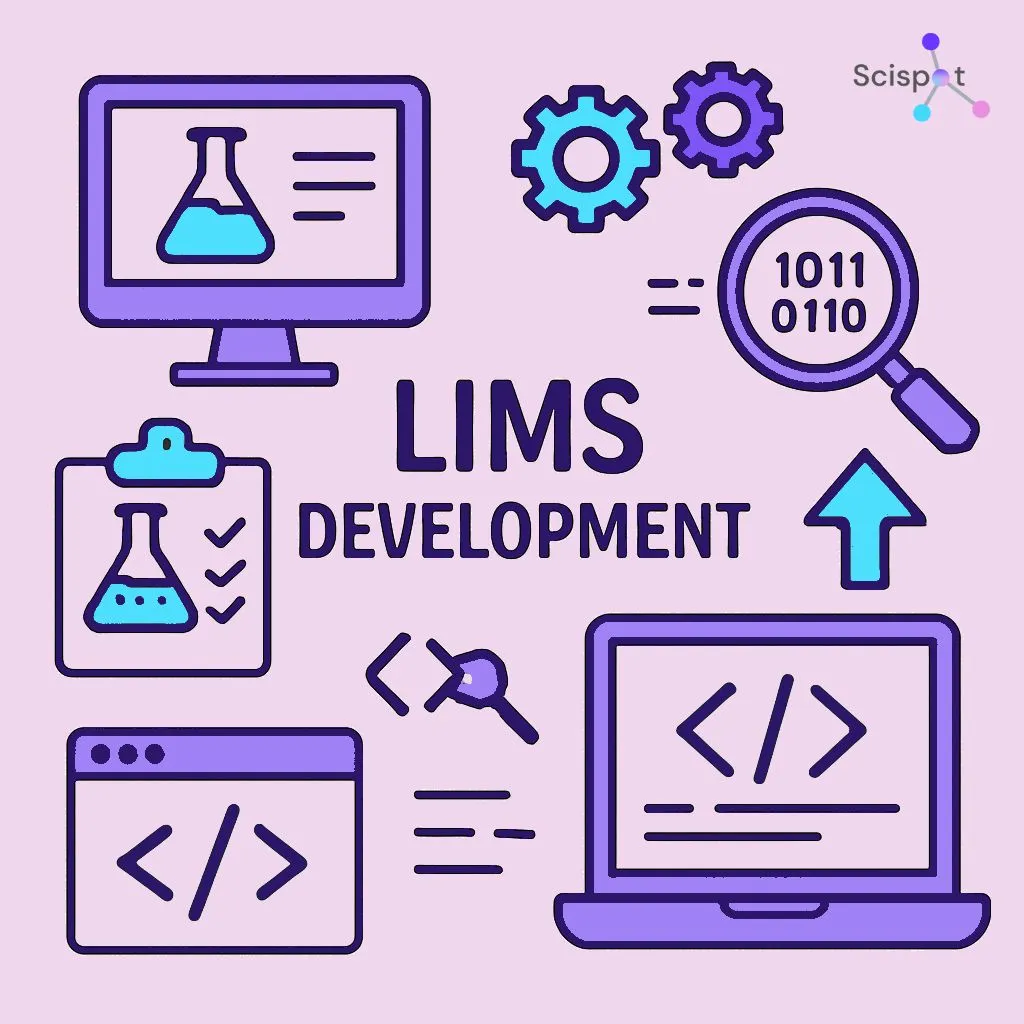
LIMS programming is not just about maintaining existing systems. It is also about adding new features and improving workflows as science and operations evolve.
A key difference between platforms is how quickly you can evolve without “breaking” the system. Several sources emphasize that configurable systems tend to be more compatible with upgrades than deeply customized systems.
Scispot’s model supports ongoing enhancement without forcing a rewrite. You can extend your Labsheets schemas, add API-driven automations, and keep integrations flowing through GLUE as your lab scales.
LIMS Programming Languages
Several programming languages are commonly used in LIMS development. The most practical choice depends on your LIMS architecture, your integrations, and the skills your team already has.
Some vendors explicitly position themselves around common languages. LabVantage, for example, highlights using commonly known programming languages like Java and JavaScript at its core and contrasts that with solutions that use proprietary languages.
Scispot’s angle is different and more workflow-centric. It focuses on API-first programming, structured data in Labsheets, and notebook-driven analysis workflows, which lets teams use the languages they already trust for science and automation.
LIMS Basic Programming Language
LIMS Basic is a programming language specifically designed for certain LIMS platforms. It is commonly used for embedded macros, triggers, and automation inside those systems.
LabWare describes “LIMS Basic” as an embedded macro scripting language used for calculations, event triggers, and automation scripts within LabWare LIMS.
This can be effective in the right environment. The tradeoff is that proprietary scripting can narrow hiring options and can increase dependency on vendor-specific expertise compared with mainstream stacks.
Python
Python is widely used in scientific workflows. It is often the easiest way to run analysis, transform files, and generate consistent outputs.
Scispot supports a strong Python-friendly workflow via Jupyter integrations. It positions this as: process data in Labsheets using secure REST APIs, connect to Jupyter, then push processed data back into Labsheets in a structured format.
Java
Java is known for robustness and scalability. It is common in enterprise-grade informatics platforms.
LabVantage explicitly references Java and JavaScript as core languages in its architecture.
If your lab is already standardized on Java services, that can be a smooth fit. Many labs still prefer to keep heavy backend work separate and use APIs at the LIMS boundary, which is where Scispot’s API-first model can simplify development paths.
SQL
Structured Query Language (SQL) is essential for managing and querying databases. It helps retrieve and validate data efficiently across samples, tests, and results.
The practical question is whether your LIMS exposes data cleanly for reporting and analysis. Scispot frames Labsheets as a relational system and provides API endpoints for structured updates, which makes downstream querying and consistency easier to maintain.
Benefits of LIMS Programming
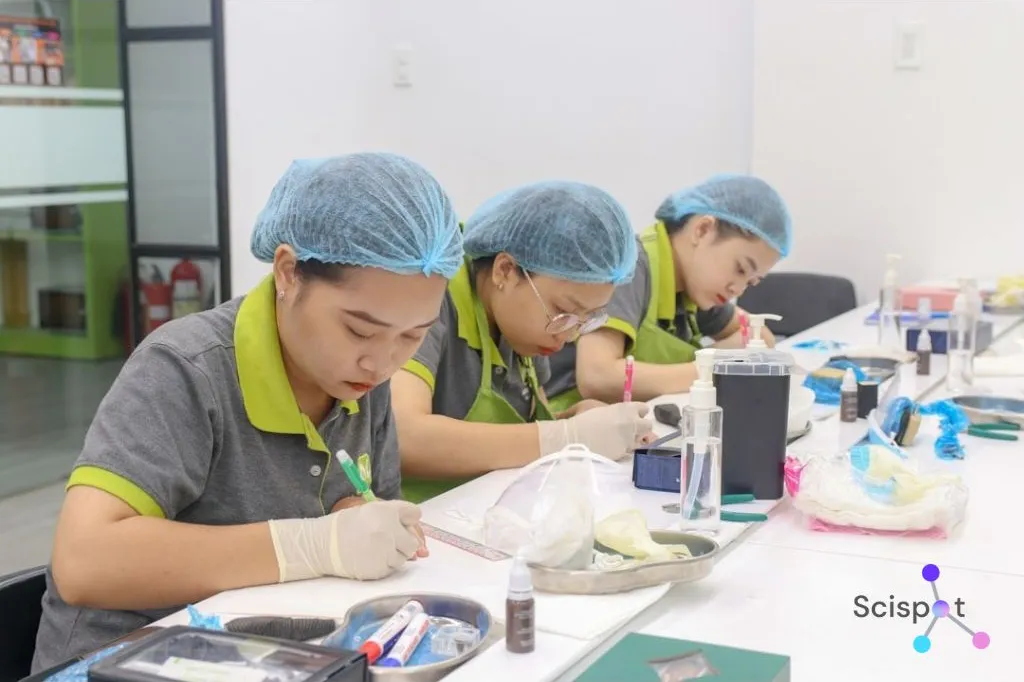
Implementing LIMS programming offers numerous benefits for laboratories. The main wins show up as speed, accuracy, and repeatability.
Improved Efficiency
LIMS programming automates routine tasks. It reduces the time and effort required for manual data entry and processing.
Scispot’s integrations and APIs are built to remove the “middle steps” between instruments and databases. GLUE is positioned as a connector and transformation layer to streamline ingestion and reduce manual work.
Enhanced Data Accuracy
By reducing manual data entry, LIMS programming can minimize errors and inconsistencies. Accurate data is crucial for decisions and for audit readiness.
Scispot emphasizes structured capture in Labsheets and API-based updates, which helps avoid “free-text drift” over time. That structure is a big reason why programmatic workflows stay reliable even as teams grow.
Increased Flexibility
LIMS programming provides the flexibility to adapt the system as research changes. That matters when methods, assays, and reporting formats evolve every quarter.
A key idea in public vendor guidance is the difference between configuration and customization. Configuration tends to preserve upgrade compatibility, while customization can increase long-term complexity.
Scispot supports a flexibility-first approach by combining configurable structured data (Labsheets) with programmable automation (APIs + Jupyter + GLUE).
Better Compliance
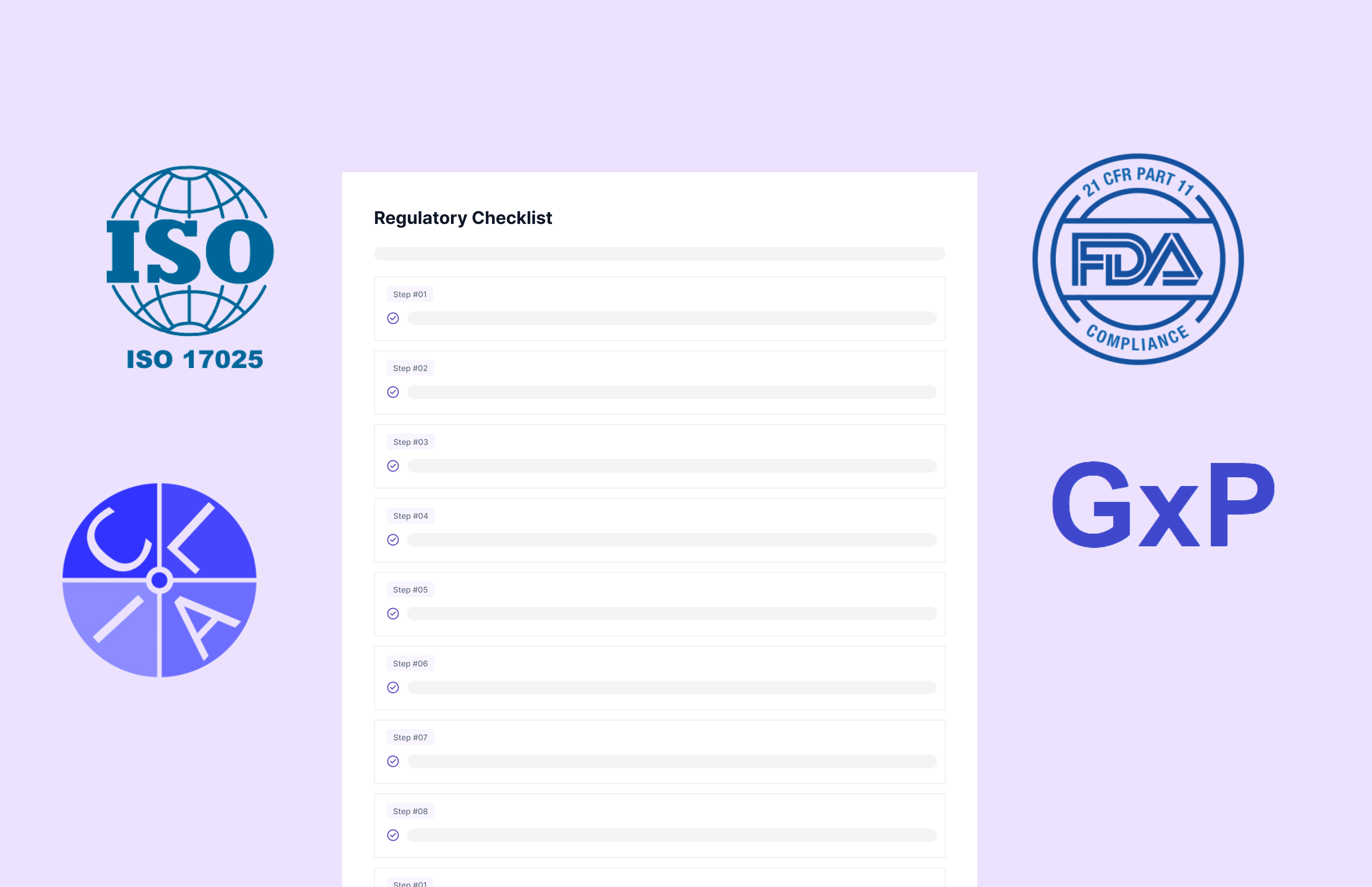
LIMS programming can support compliance by enforcing consistent workflows and producing predictable records. Automated reporting and controlled data structures reduce gaps during audits.
Scispot positions Labsheets with audit-trail oriented workflows in customer stories and describes structured system behavior that helps replace scattered spreadsheets.
LIMS Tools and Applications
LIMS programming is supported by a range of tools and applications that expand what a LIMS can do. The best setups treat the LIMS as a hub, not a silo.
LIMS Software
LIMS software provides the foundation: samples, tests, data capture, reporting, and traceability. Programming enhances this by adding logic, automation, and integrations.
Scispot’s positioning is that you can run structured lab work in Labsheets and connect it to external systems through APIs and integrations. That gives teams a single system of record without losing the flexibility of their existing stack.
LIMS Systems
LIMS systems become more valuable when they coordinate workflows across the lab. That means connecting instruments, people, and data so a sample’s story stays intact.
Scispot’s GLUE is presented as a way to connect instruments and other systems to that central workflow. This reduces “data seams” that show up when labs rely on separate tools that do not share structure.
LIMS Solutions
LIMS solutions are the full package: software, configuration, programming, integrations, and reporting. The best solutions minimize brittle custom code while still letting labs move fast.
Multiple industry sources argue that configuration-first approaches help reduce upgrade risk versus heavy customization. Scispot’s model aligns well with that principle because it emphasizes structured configuration plus API-driven automation for edge cases.
Getting Started with LIMS Programming
If you’re new to LIMS programming, start with your lab’s friction points. Look for manual steps that repeat every day.
Understand Your Lab’s Needs: Identify your workflows and where data is retyped or copied. Those are the best targets for automation.
Choose the Right Programming Language: Pick what matches your team’s strengths and your LIMS interface. API-first systems make this easier because you can use Python, JavaScript, or anything that speaks HTTP.
Learn the Basics: Focus on schemas, IDs, and validation rules. Scispot’s API documentation, for example, discusses row IDs and updating rows by ID columns, which is a clean pattern for reliable automation.
Experiment and Practice: Start with one integration. A common first win is instrument flat-file ingestion, transformation, and writing results back into a structured table.
Collaborate with Experts: Use vendor documentation and best practices around configuration vs customization. This helps you avoid building something that becomes hard to upgrade later.
Conclusion
LIMS programming unlocks the full potential of a laboratory information management system. It enables customization, integration, and continuous improvement without losing control of data quality.
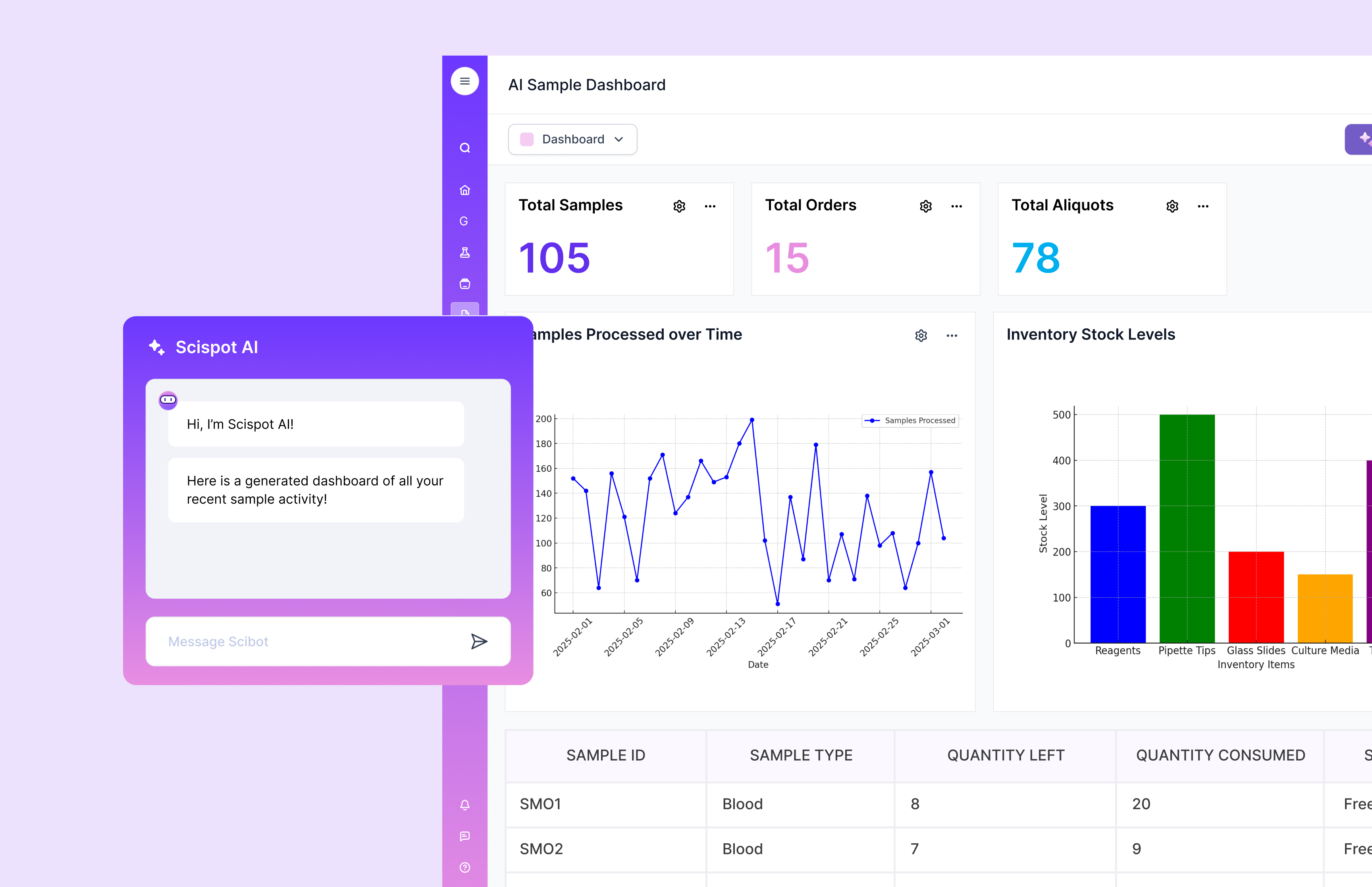
Scispot makes this practical for modern labs by pairing a structured database-like layer (Labsheets) with secure REST APIs, Jupyter-friendly workflows, and an integration engine (GLUE). This creates a clean loop from instrument data to analysis to final, structured records.
By embracing LIMS programming in a configuration-first way, your lab can move faster and stay audit-ready. You get flexibility without turning your LIMS into a brittle custom software project.
.webp)
.webp)
.webp)