



It's a familiar picture: sample tracking in one spreadsheet, experiment logs in another, inventory in a third tool, and maybe an old ELN or LIMS that nobody wants to touch. Data lives everywhere. Nobody has a single source of truth. And when auditors or partners ask for traceability, the answer is a patchwork of exports and "let me find that."
More and more labs are choosing a different path - consolidating onto one LabOS (laboratory operating system) that unifies ELN, LIMS, inventory, and instrument data. Not by running a multi-year migration program, but by phasing: start with one high-impact workflow, get value, then expand. The goal is one platform, one source of truth, and a real total cost of ownership (TCO) that beats fragmentation.
Why does fragmentation happen in the first place?
Labs don't set out to run on six tools. It happens over time:
Fragmentation has a cost: duplicate data entry, version chaos, no single audit trail, and time spent reconciling instead of doing science. Consolidation onto one LabOS addresses that - but only if you do it in a way that doesn't require a multi-year project.
What does "one LabOS" actually mean?
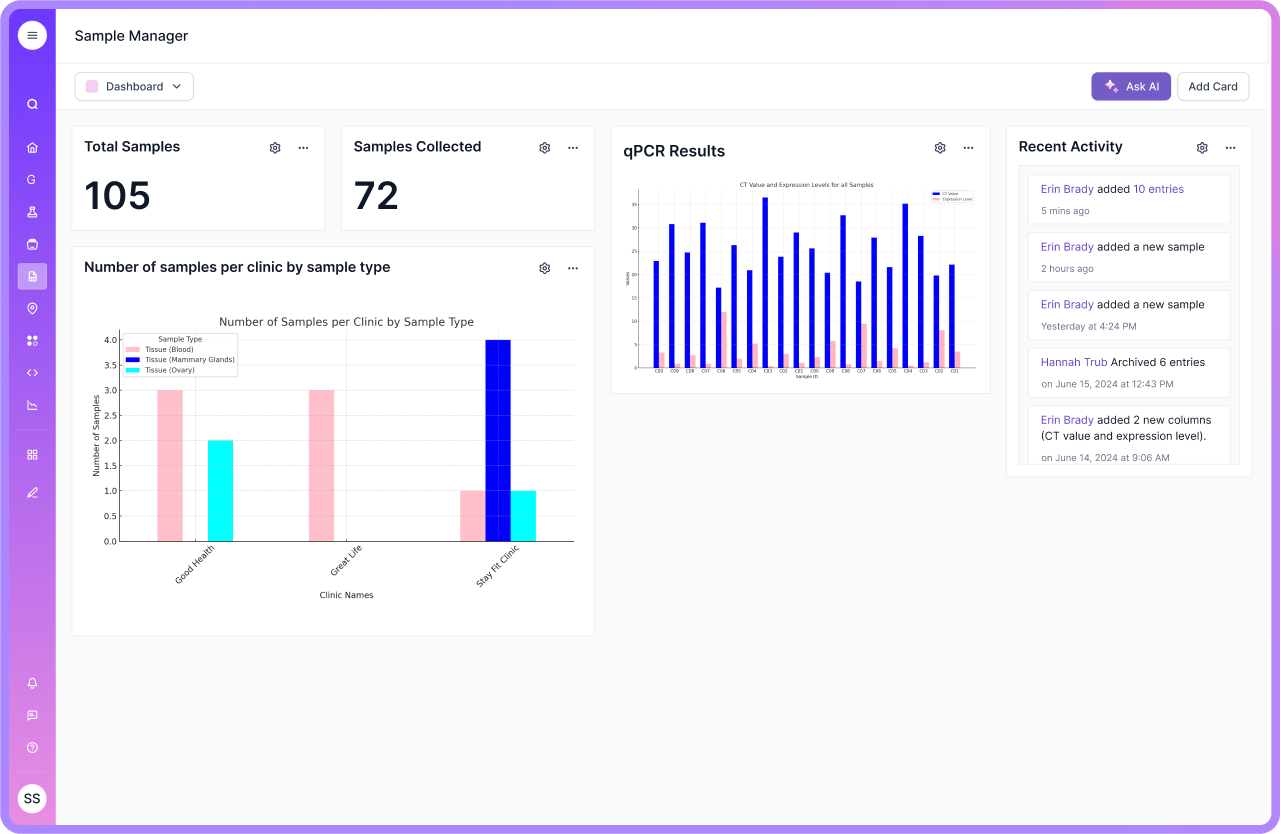
A LabOS is a single platform that replaces or consolidates:
Instead of maintaining separate systems and stitching them with exports and manual updates, you run one system. Scientists get a consistent experience - often a spreadsheet-like grid for day-to-day work - while the platform handles audit trails, access control, and connectivity. That's the "all-in-one lab platform" that shows up in search and in how modern biotechs describe what they want.
The real cost of running ELN + LIMS + spreadsheets
Before consolidating, it helps to count the cost of fragmentation:
Many labs find that the TCO of one modern LabOS - including implementation and ongoing use - is lower than the combined cost of legacy systems plus spreadsheets plus the hidden cost of fragmentation. The trick is choosing a platform that goes live in weeks and lets you phase the rollout, so you're not betting everything on a single big-bang migration.
How to consolidate without a multi-year program
Consolidation doesn't have to mean a 12-month project. A phased approach works:
On Talk is Biotech, we hear this from founders and lab leads: they didn't want another multi-year implementation. They wanted to replace spreadsheets and point solutions with one platform - and get live in weeks, not quarters.
Who is consolidation for?
This path fits labs that:
It's especially relevant for growing biotechs, CROs and CDMOs managing multiple clients or projects, and teams that have outgrown Excel but don't want - or need - a classic 12-month LIMS rollout to get there.
Bottom line
Fragmented lab tools and spreadsheets create hidden cost, risk, and friction. Consolidating onto one LabOS can reduce that - and it doesn't require a multi-year program. Phased rollout, a spreadsheet-native experience where it helps, and a platform built for quick adoption and change can get you to one source of truth without the chaos.
If you're evaluating lab software, ask: Can we start with one workflow and expand? Does it replace ELN, LIMS, and spreadsheets in one place? The answers will tell you whether you're looking at another point solution or a real path to consolidation.
.webp)
.webp)
.webp)